

Your home should be the place where you feel safest. But even well-maintained properties can have hidden vulnerabilities that increase the risk of serious accidents, break-ins, fast-moving fire hazards, or other safety concerns. That’s why booking a residential risk assessment is one of the smartest investments homeowners can make. It identifies potential structural and security risks before they turn into costly or dangerous problems, giving you a clear plan to improve your home’s overall safety.
The reality on the ground is that most homeowners walk past catastrophic vulnerabilities every single day without noticing a thing. At SafeHouse Security Consultants, we provide comprehensive property audits that go way beyond a simple walkthrough.
Key Takeaways
- Vulnerability Identification: Pinpoint hidden entry weaknesses and structural hazards before criminals or accidents exploit them.
- Proactive Defense: Stop reacting to break-ins or fires after they destroy your peace of mind and property value.
- Hyper-Local Insights: Utilize real-time neighborhood crime data analysis to tailor your home’s physical defense mechanisms.
- Turnkey Resolution: Access structured, budget-friendly improvement strategies along with hands-on, seamless implementation support.
- Long-Term Adaptability: Keep your home’s security hardware and protocols aligned with evolving local threat environments.
Book a Consultation Now
What Is a Professional Property Security Audit?
A residential risk assessment is a complete, deep-dive evaluation of your property’s physical security, fire safety protocols, and structural vulnerabilities. Rather than relying on generic security advice, this process maps out every weak point on your property and provides an actionable blueprint to fortify your home.
Here’s the part most alarm companies won’t tell you: a shiny plastic keypad on the wall won’t stop a burglar if your back door frame is rotted or your landscaping creates a perfect hiding spot. A professional evaluator doesn’t just look for what’s protected; they hunt for the exact gaps an intruder or an accident will exploit. At SafeHouse Security Consultants, this comprehensive approach blends neighborhood crime data, physical entry testing, and fire safety checks to turn your house into an unassailable fortress.
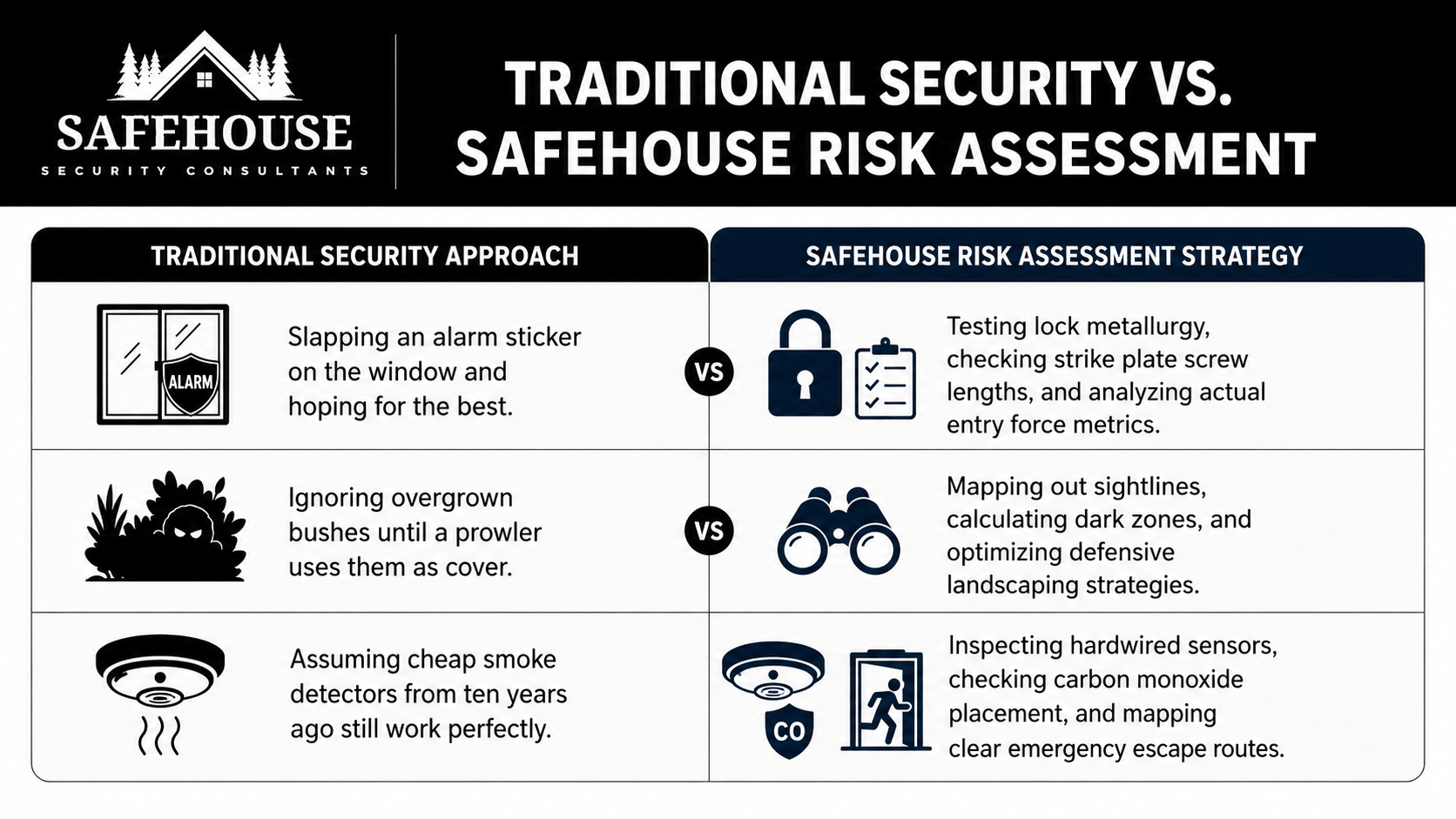
The Complete Property Protection Blueprint
| Traditional Security Approach | SafeHouse Risk Assessment Strategy |
| Slapping an alarm sticker on the window and hoping for the best. | Testing lock metallurgy, checking strike plate screw lengths, and analyzing actual entry force metrics. |
| Ignoring overgrown bushes until a prowler uses them as cover. | Mapping out sightlines, calculating dark zones, and optimizing defensive landscaping strategies. |
| Assuming cheap smoke detectors from ten years ago still work perfectly. | Inspecting hardwired sensors, checking carbon monoxide placement, and mapping clear emergency escape routes. |
How Does an Expert Property Evaluation Identify Blind Spots?
1Hardening the Exterior Perimeter
- Defensive Landscaping Review: Trimming back thick foliage that blocks sightlines from the street or creates blind spots for your security cameras.
- Perimeter Gate and Fencing Stress Tests: Evaluating latch strength, gate heights, and weak points where intruders could easily scale your fence.
- Lighting Infrastructure Calibration: Mapping out dark zones across your driveways, walkways, and backyard patios to eliminate shadows.
Fortifying Critical Entry Points
- Deadbolt and Lock Metallurgy Checks: Inspecting the grade of your locks and verifying if your strike plates are secured with heavy-duty three-inch screws.
- Sliding Door and Window Track Analysis: Identifying easily bypassed window latches and reinforcing sliding glass doors against lifting attacks.
- Entryway Visibility Profiling: Ensuring your front door has clear, unobstructed visibility so you always know exactly who is standing on your porch.
Interior Environmental Hazard Checks
- Structural Fall Mitigation: Finding loose stair handrails, unanchored rugs, and slick flooring surfaces that cause catastrophic slips.
- Electrical Fire Prevention Inspections: Checking for overloaded outlets, frayed extension cords, and outdated wiring setups in older garages or basements.
- Early Warning Sensor Audits: Testing the expiration dates and battery levels of every smoke and carbon monoxide detector in your living spaces.
Critical Environmental and Security Risk Categories
Asset Protection
Our team looks closely at package theft risks and garage door vulnerabilities. We analyze whether your high-value items are easily visible through front windows, making your home a temptation for opportunistic thieves.
Technical Safety
We dive deep into your home’s infrastructure. This includes examining electrical panel safety, testing GFCI outlets in high-moisture zones like kitchens and bathrooms, and assessing emergency egress windows to ensure they open easily during a fire.
Local Threat Levels
Every assessment features a deep dive into local property crime statistics. We look at the exact tactics criminals are using in your neighborhood so we can build specific countermeasures into your personal security plan.
Essential Industry Terms Every Homeowner Must Know
- Target Hardening: Strengthening a building’s physical structure and entry points to make it significantly more difficult for unauthorized individuals to break in.
- CPTED (Crime Prevention Through Environmental Design): Using smart landscaping, bright exterior lighting, and clear sightlines to naturally deter criminal activity around a property.
- Strike Plate Reinforcement: Upgrading the metal plate on a door frame with heavy-duty screws that anchor deep into the structural wall framing, preventing door kick-ins.
- Egress Route: A clear, unobstructed path of travel that allows occupants to safely escape a home during a fire or structural emergency.
- Load-Bearing Handrail: A securely anchored safety rail capable of supporting sudden, heavy weight to prevent falls on stairways and steps.
Who Needs a Professional Property Safety Audit Immediately?
A comprehensive home evaluation isn’t just a generic luxury for high-end estates. It provides vital, lifesaving information for families moving into a new property who want to establish a baseline of safety before unpacking. It’s an indispensable tool for home buyers looking for leverage before closing a deal, and for smart home sellers who want to clear out liabilities before putting a house on the market.
Even if you have lived in the same neighborhood for a decade, local crime trends change, trees grow to block your security cameras, and structural elements slowly degrade. Regular updates ensure your defensive setups keep pace with reality.
Book a Consultation Now

Conclusion
Understanding where your property is vulnerable is the absolute baseline of true family protection. A professional residential risk assessment takes the guesswork out of home security, giving you a crystal-clear roadmap of your property’s hidden dangers and structural flaws before they turn into major emergencies.
At SafeHouse Security Consultants, we don’t just hand you a dry checklist and walk away. Our experienced team handles all the heavy lifting and time-consuming logistics required to upgrade your locks, fix your lighting, and fortify your entry points. Plus, our clients get exclusive insider pricing on top-tier security hardware and system upgrades.
Schedule your professional property audit today at (424) 352-8639.
Frequently Asked Questions
What exactly is involved in a residential risk assessment?
A residential risk assessment is a thorough physical audit of your home where security specialists check your doors, window locks, lighting, landscaping, fire alarms, and fall hazards to locate hidden vulnerabilities.
How frequently should I get my property checked by a specialist?
It is highly recommended to book an evaluation every few years, immediately after completing major home renovations, or right when you move into a brand-new neighborhood.
Can a newly constructed home still have security or safety flaws?
Yes, absolutely. Brand-new builds frequently feature cheap builder-grade locks, poor exterior lighting designs, or layout blind spots that leave your property open to easy break-ins.
Do I have to buy expensive alarm systems after the audit is finished?
Not at all. Many of the most critical fixes we uncover involve simple, low-cost structural tweaks like upgrading door frame screws, trimming thick bushes, or changing out deadbolt locks.
Who should consider booking a residential security evaluation?
Every homeowner, active property buyer, rental landlord, and real estate professional needs to utilize these assessments to safeguard occupants and protect long-term real estate investments.
Book a Consultation Now