

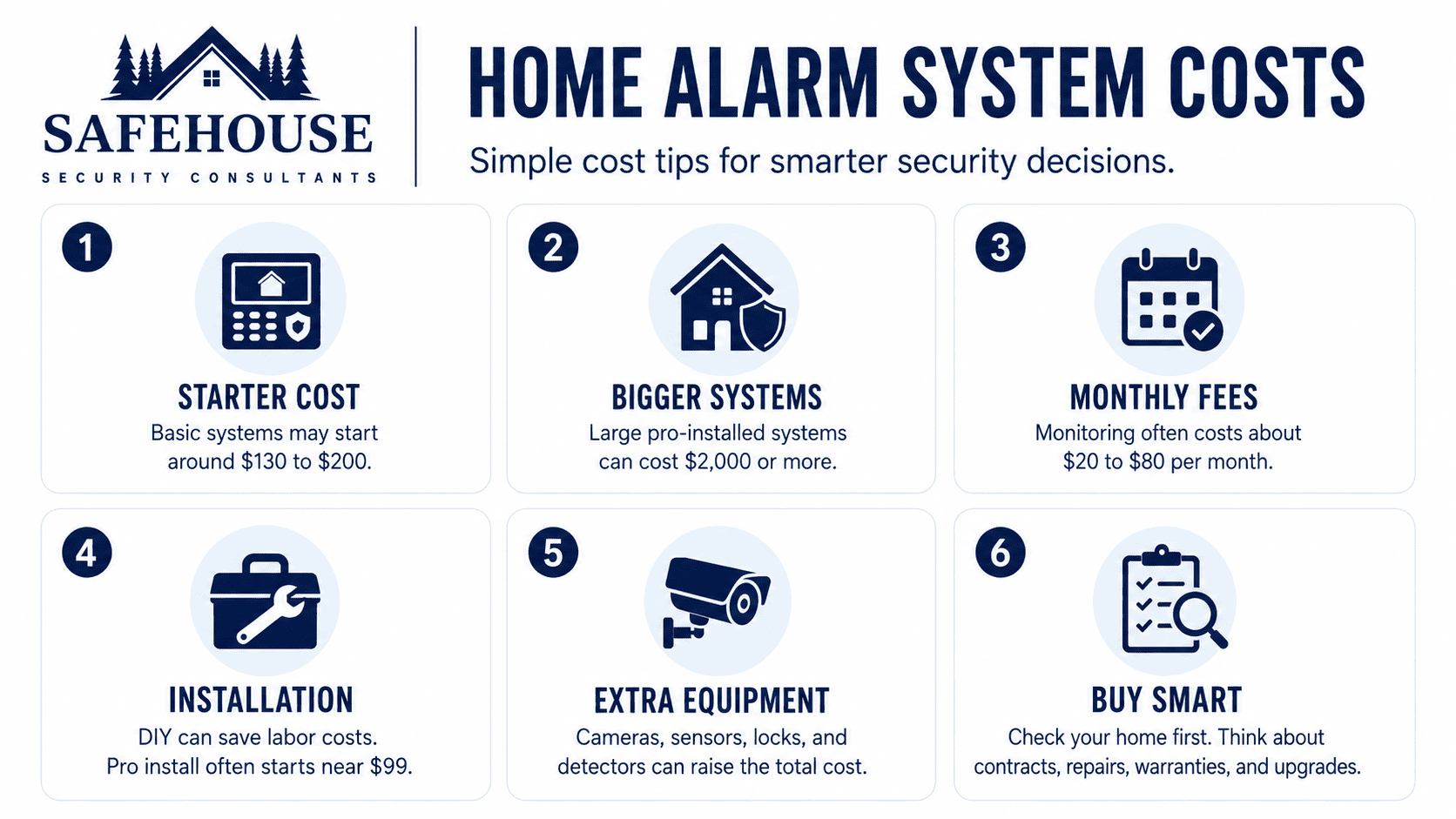
A home alarm system cost around $130 for a basic DIY setup to $2,000 or more for a comprehensive professionally installed system. Starter equipment packages average a little over $200, while professional monitoring commonly adds about $20 to $80 per month. Professional installation may start around $99, although pricing varies considerably by provider, equipment, home size, and contract.
That wide range is why we do not recommend choosing a security system based on price alone.
A $200 package may be perfectly adequate for one property and leave major security gaps in another. Likewise, spending thousands on cameras, sensors, and smart devices does not necessarily mean a home is better protected if the equipment is poorly selected or positioned.
We prefer to start by identifying the home’s actual vulnerabilities. Our 80+ point security assessment evaluates the property in detail, considers crime data specific to the area, and gives homeowners tailored recommendations before they invest in new equipment, repairs, or upgrades.
Key Takeaways
- A basic home alarm system may start around $130 to $200, while larger professionally installed systems can cost $2,000 or more.
- Professional monitoring typically adds about $20 to $80 per month, depending on the provider and features included.
- DIY installation can eliminate installation labor costs, while professional installation commonly starts around $99 and can cost more for complex systems.
- Cameras, additional sensors, smart locks, environmental detectors, and other equipment can substantially increase the total home alarm system cost.
- We recommend assessing the property before buying equipment so the budget goes toward actual vulnerabilities rather than unnecessary devices.
- The lowest upfront price is not always the lowest long-term cost. Monitoring contracts, cancellation terms, repairs, warranties, and future upgrades should all be considered.
Book a Consultation Now
What Is the Average Home Alarm System Cost?
The average price depends on how much protection you want and how the system is installed and monitored.
For context, NerdWallet’s 2026 pricing review found that starter equipment kits average a little over $200. Basic DIY kits can begin around $130, while more comprehensive professionally installed systems can reach $2,000 or more. Professional monitoring generally falls between approximately $20 and $80 per month.
A simple way to think about your total cost is:
Equipment + installation + monitoring + optional equipment + future service = total home security cost
Here is a general breakdown:
| Cost Component | Typical Cost |
| Basic starter equipment | Around $130–$300+ |
| Larger or comprehensive systems | Up to $2,000+ |
| DIY installation | Usually $0 in labor |
| Professional installation | Often starts around $99 |
| Self-monitoring | May be free |
| Professional monitoring | About $20–$80/month |
| Cameras, locks and additional sensors | Varies by equipment |
These are general market ranges, not our own quoted prices. The actual cost depends on the property and the protection you choose.
What Do You Pay for When Buying a Home Alarm System?
The advertised equipment package is only one part of the price.
Before comparing systems, we recommend separating the costs into equipment, installation, monitoring, and optional upgrades.
Alarm Equipment and Sensors
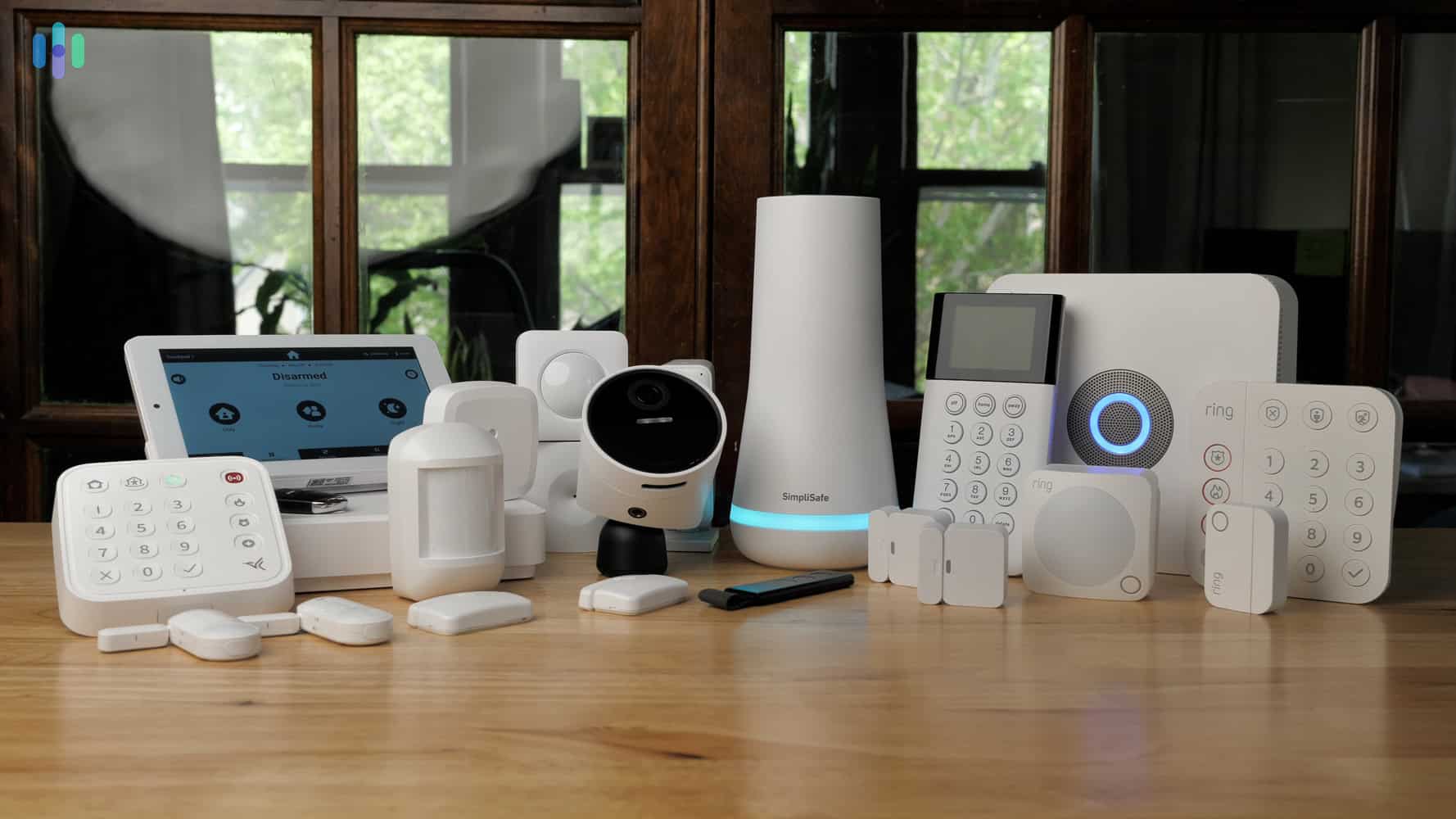
Most starter alarm systems include some combination of:
- A central hub or base station
- Keypad
- Door and window sensors
- Motion detector
- Siren
- Mobile app access
Larger homes usually need more sensors because there are more entry points and areas to cover.
Current retail pricing shows how quickly package size can change the equipment cost. For example, Ring currently lists its five-piece alarm kit at $199.99, while larger packages cost more as additional contact sensors, keypads, motion detectors, and other equipment are added.
This is one reason we caution against comparing two quotes solely by package price. One system might cover only a front door and central hallway, while another protects multiple exterior doors, vulnerable windows, and other important areas.
Security Cameras
Cameras are usually separate from a basic alarm package or available as an upgrade.
Depending on the property, a homeowner might consider:
- Video doorbells
- Outdoor cameras
- Indoor cameras
- Floodlight cameras
- Cameras covering driveways or detached structures
More cameras increase the equipment cost and can also increase subscription expenses if video recording or cloud storage requires a paid plan.
We recommend choosing camera locations based on useful coverage rather than simply installing as many cameras as possible.
Smart Locks and Home Automation
Modern security systems can also integrate with smart locks, lighting, thermostats, garage controls, and other connected devices.
These features can be convenient, but they also raise the initial investment.
We generally separate security needs from convenience features during the planning stage. If a device solves an actual security problem, it belongs higher on the priority list. If it mainly adds convenience, homeowners can decide whether that benefit justifies the extra cost.
How Much Does Professional Alarm Monitoring Cost?
Professional monitoring generally costs about $20 to $80 per month, although plans differ in what they include.
With professional monitoring, a monitoring center can respond when the system reports an alarm and follow the provider’s procedures for contacting you or requesting emergency assistance.
Pricing often increases when plans add features such as video recording, video verification, smart-home functions, cellular backup, or advanced camera monitoring.
For example, Ring currently lists professional monitoring in its Ring Pro subscription at $19.99 per month, while its higher-end Virtual Security Guard service costs considerably more because it includes live video monitoring and real-time intervention features.
Vivint lists its standard HomeProtect monitoring at $29.99 per month, along with separate equipment and professional installation charges under its regular pricing.
The takeaway is simple: compare what the monthly fee actually provides, not just the number.
Can You Have a Home Alarm System Without a Monthly Fee?
Yes. Some alarm systems can be self-monitored without paying for professional monitoring.
With self-monitoring, alerts may be sent directly to your phone, and you are responsible for deciding what to do next. Certain providers charge additional subscription fees for features such as recorded video, cloud storage, enhanced notifications, or cellular backup.
Self-monitoring can reduce the ongoing home alarm system cost, but the trade-off is responsibility.
You need to be available to notice the alert and respond appropriately. That may be less practical while traveling, sleeping, working somewhere without reliable phone access, or otherwise unable to respond.
We recommend thinking about monitoring as a service decision rather than automatically choosing whichever option is cheapest.
How Much Does Alarm System Installation Cost?
DIY installation may cost nothing beyond your time because many wireless systems are designed for homeowner setup.
Professional installation commonly starts around $99, although more complicated systems can cost more. Hardwired components, cameras, extensive sensor coverage, difficult installation locations, and other requirements can affect the final price.
Professional systems also sometimes bundle or discount installation in exchange for a monitoring agreement.
That distinction matters.
An advertised “$99 system,” for example, might require a multi-year monitoring contract. Current ADT promotions offer professionally installed packages at promotional prices but require qualifying 36-month monitoring agreements and include early cancellation conditions.
We recommend looking beyond the advertised installation price and calculating what you will actually pay over the agreement period.
What Factors Affect Home Alarm System Cost?
No two homes have exactly the same security requirements.
Several factors can change the final investment.
Home Size and Layout
A small home with two main entry doors may require considerably less equipment than a large property with multiple floors, exterior doors, accessible windows, garages, patios, and detached buildings.
More areas to protect usually mean more sensors and equipment.
Number of Entry Points
Doors and accessible windows are important when planning sensor coverage.
Buying a starter kit without counting the entry points you actually want protected can result in unexpected add-on costs later.
Cameras and Video Coverage
Adding one doorbell camera is very different from building a system with several outdoor cameras, indoor cameras, and continuous or event-based recording.
Video can quickly become one of the larger equipment costs.
Professional vs. DIY Installation
DIY installation reduces labor costs.
Professional installation costs more, but it may make sense for complex systems, difficult equipment locations, hardwired devices, or homeowners who do not want to configure everything themselves.
Monitoring Level
Self-monitoring may cost little or nothing.
Professional alarm monitoring adds an ongoing fee, and plans with advanced video services generally cost more.
Existing Equipment
You may not need to replace everything.
Part of our assessment process is determining whether existing equipment can continue to serve the property, needs repair, should be upgraded, or should be replaced.
That can help prevent paying for an entirely new system when a smaller change would solve the problem.
Why We Recommend a Security Assessment Before Buying Equipment
One of the easiest ways to waste money on home security is to start shopping before understanding what needs to be protected.
A large equipment package can look impressive on paper. But if the sensors and cameras do not address the home’s actual vulnerabilities, the homeowner may be paying for quantity rather than useful coverage.
That is why we start with a much broader review.
Our 80+ point security assessment includes:
- A detailed report with recommendations tailored to the home or business
- Thorough analysis of crime data for the specific area
- Identification of security measures that may need to be added, repaired, or upgraded
- Help handling the logistics involved in implementing recommended improvements
- Exclusive discounts on qualifying new security systems, repairs, or upgrades
Our goal is to help homeowners understand where their money can make the greatest difference before they commit to equipment.
How Much Should You Budget for a Home Security System?
Instead of choosing an arbitrary budget first, we recommend dividing security improvements into priorities.
Priority 1: Correct Clear Vulnerabilities
Start with areas where access is poorly protected, equipment is broken, coverage is missing, or another clear weakness exists.
These improvements deserve the first portion of the budget.
Priority 2: Improve Detection and Response
Next, consider whether additional door sensors, motion detection, cameras, alarms, or monitoring would improve the ability to detect and respond to a security event.
Priority 3: Add Convenience Features
Smart locks, home automation, additional cameras, upgraded controls, and similar features can be useful, but they do not always need to be purchased at the same time as the essential system.
This approach can make the project more manageable while keeping spending tied to actual security priorities.
DIY vs. Professionally Installed Alarm Systems: Which Costs Less?
DIY systems generally cost less upfront because you are not paying a technician to install the equipment.
However, lower upfront cost does not automatically make DIY the better choice.
A DIY system may suit someone who:
- Has a straightforward property
- Is comfortable installing and configuring devices
- Wants flexible or month-to-month monitoring
- Does not need extensive hardwired equipment
Professional installation may make more sense when:
- The property is large or complex
- Multiple cameras need careful placement
- Existing security equipment is being incorporated
- Hardwired devices are required
- The homeowner wants the system planned and installed for them
We look at the property first because the best value depends on what the home actually requires.
Watch for Contracts and Costs Beyond the Advertised Price
Before signing a home security agreement, read the full terms.
The Federal Trade Commission specifically recommends checking the installation price, monitoring fee, contract length, discounts, warranty, repair responsibilities, cancellation policy, and early termination terms. The FTC also recommends asking local police and fire departments whether alarm registration is required and whether false-alarm fees apply.
That makes the real comparison something closer to:
Upfront cost + total monitoring commitment + installation + add-ons + service fees + possible cancellation costs
A low introductory price can look very different after those expenses are included.
We also advise against making a security decision because someone is pressuring you with claims about supposed crime spikes or an offer that “expires immediately.” The FTC recommends verifying local crime information independently rather than relying on fear-based sales tactics.
Our assessment approach uses crime data specific to the property area so recommendations can be based on evidence rather than generalized fear.
Is a More Expensive Alarm System Always Better?
No.
Price tells you how much equipment and service you are buying. It does not automatically tell you whether those products are appropriate for your home.
An expensive system can still have:
- Poor camera placement
- Unprotected entry points
- Unnecessary equipment
- Weak passwords or poor account security
- Broken or outdated sensors
- Features the homeowner never uses
By contrast, a carefully planned system with fewer components may provide better practical coverage.
We would rather identify the right security measures first and spend second.
Is a Home Alarm System Worth the Cost?
For many homeowners, an alarm system is a worthwhile part of a broader home security plan—but the value depends on whether the system fits the property.
Security involves more than installing a keypad and putting sensors on a few doors.
We look at the entire property, identify vulnerabilities, examine relevant local crime data, and then recommend improvements based on what we find.
That process gives homeowners a clearer answer to the question behind “How much does a home alarm system cost?”
The better question is:
What does my home actually need, and what is the most sensible way to pay for it?
Book a Consultation Now
Find Out What Your Home Actually Needs
Your home should be somewhere you can spend time with the people you care about without constantly wondering whether you have overlooked a security problem.
We help remove the guesswork.
Our 80+ point security assessment examines your property in detail, analyzes relevant crime data for your area, and provides clear recommendations for improving security. If equipment, repairs, or upgrades are recommended, we can also handle the time-consuming logistics of putting those improvements in place.
Rather than buying a generic alarm package and hoping it covers the right areas, we can help you build a security plan around the home you actually have.
Schedule your security assessment and let us identify where your home may be vulnerable, what improvements make sense, and where your security budget can be used most effectively. Contact SafeHouse Security Consultants at (424) 352-8639 today.
Frequently Asked Questions
How much does a basic home alarm system cost?
Basic DIY alarm kits can begin around $130, while starter packages average a little over $200. The final cost increases as you add sensors, cameras, smart locks, professional installation, or monitoring.
How much is home alarm monitoring per month?
Professional alarm monitoring commonly costs approximately $20 to $80 per month. Pricing depends on the provider and whether the plan includes features such as video recording, cellular backup, verification, or advanced camera monitoring.
Is there a monthly fee for every home alarm system?
No. Some systems allow self-monitoring without a monthly professional monitoring fee. Additional features such as cloud video storage or enhanced notifications may still require a subscription.
Is professional installation worth paying for?
Professional installation can be worthwhile for larger homes, complicated systems, hardwired equipment, or homeowners who want someone else to handle equipment placement and setup. A straightforward wireless system may be practical to install yourself.
What makes a home security system more expensive?
Home size, the number of doors and windows, camera coverage, smart locks, environmental sensors, professional installation, monitoring services, and specialized equipment can all increase the total price.
How do I know what security equipment my home actually needs?
We recommend starting with a professional security assessment rather than choosing equipment based solely on a package or advertised price. Our 80+ point assessment evaluates the property, reviews area-specific crime information, and provides tailored recommendations based on the vulnerabilities we identify.